Mountain Bike Drift: Simply put, it is tail flicking, which is the “high-speed cornering” in racing technology. It is one of the cornering skills commonly used in mountain bike competitions!
Required equipment:
1.A helmet, preferably a full-coverage helmet.
2.Knee pads. When drifting, the speed is high and the body is low, and the knees are prone to rubbing against the ground.
3.Gloves. Leather and cotton gloves are fine, as long as they can protect your hands.
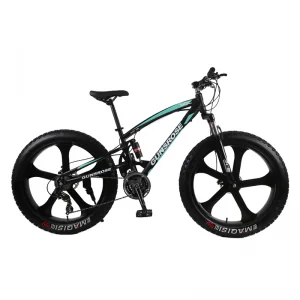
4.Tires. According to the habit, the use of smooth tires during performances is because most of the performances will choose to be on the flat ground for good looks, but the competition is different. In the race, drift is often used to assist in cornering, so wide tires with good grip are required. If it is a thin and smooth tire, the phenomenon of idling the pedal wheel is easy occurs during drifting.
5.Soft-soled shoes. The sole should be thick and soft, and sometimes the inside foot should be used when drifting.

Mountain bike drift cornering tips:
1.Accelerate the bicycle to more than 23KM/H, and the speed is up to you.
2.Switch to a lighter or heavier gear! Depending on the road conditions, mainly when turning, let the wheels continue to turn!
3.Enter the bend.
4.Lean forward, squeeze the brakes for 2 seconds, then release the brakes a bit, because you’re still pedaling through the corner.
5.Ride hard enough to turn the rear wheel. Although the bicycle is leaning, keep the center of gravity upright.
6.Adjust the center of gravity to straighten the bike when the bike is pedaling hard to assist drifting, and keep the pedaling state.
7.Enter the straight.
Completion Note: Control the drift of the bicycle by adjusting the inclination of the center of gravity and the speed of the pedalling.
Drift in an S-curve:
1.Accelerate the bicycle to more than 23KM/H, and the speed is up to you.
2.Switch to a lighter or heavier gear! Depending on the road conditions, mainly when turning, let the wheels continue to turn!
3.Enter the bend.
4.Lean forward, squeeze the brakes for 2 seconds. The specific time depends on the distance and arc of the two bends.
5.Ride hard enough to turn the rear wheel. Although the bicycle is leaning, keep the center of gravity upright.
6.Adjust the center of gravity to straighten the bike when the bike is pedaling hard to assist drifting, and keep the pedaling state.
7.Enter the next bend.
8.Lean forward, squeeze the brakes for 2 seconds, then release the brakes a bit, because you’re still pedaling through the corner.
9.Ride hard enough to turn the rear wheel. Although the bicycle is leaning, keep the center of gravity upright.
10.Adjust the center of gravity to straighten the bike when the bike is pedaling hard to assist drifting, and keep the pedaling state.
11.Enter the straight.
Completion Note: Control the drift of the bicycle by adjusting the inclination of the center of gravity and the speed of the pedalling.
Drift in place:
1.Accelerate the bicycle to more than 23KM/H, and the speed is up to you.
2.Switch to a lighter or heavier gear! Depending on the road conditions, mainly when turning, let the wheels continue to turn!
3.Enter the bend.
4.Lean forward, tighten the rear brake, and pull back the leaning body when the drift is complete.
Completion Note: Control the drift of the bicycle by adjusting the inclination of the center of gravity and the speed of the pedalling.