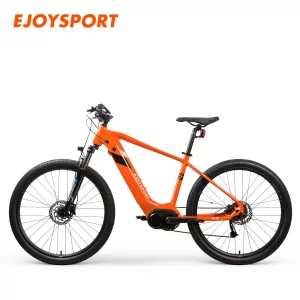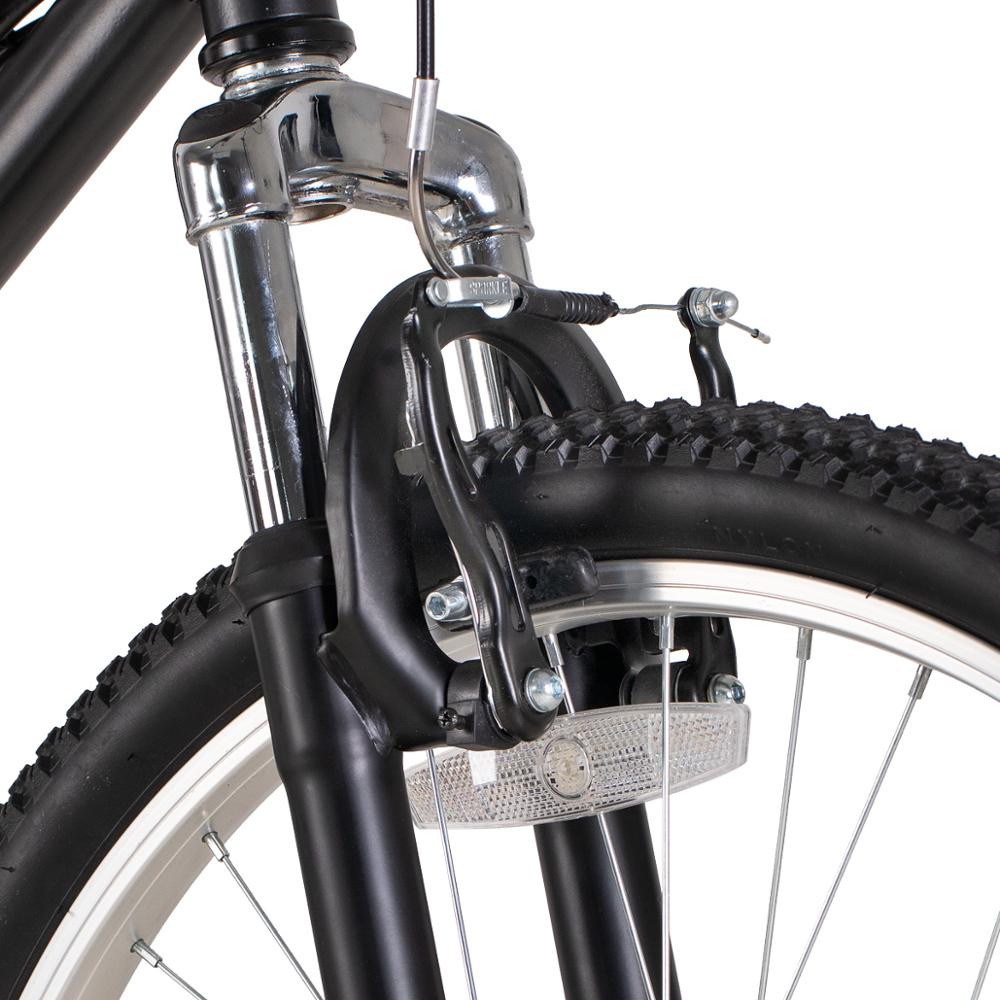
Mountain bikes are bicycles specially designed for off-road (hills, trails, fields and gravel roads, etc.). Riding mountain bikes for outings and off-roading has become popular among more and more young people and has become a healthy and fashionable sport. Mountain bikes have high requirements for tires. How much do you know about mountain bike tires? Let’s take a look at the characteristics of some mountain bike tires.
Construction of tires:
The clincher of a bicycle is the main body of the tire composed of a mesh cover. A layer of tire skin is attached to increase wear during rolling, and two bead lips are embedded to fix the tire on the rim, thus forming the main structure of the tire. Since bicycle tires are relatively thin and are easily punctured, most of them will add an explosion-proof layer between the tire skin and the mesh cover to increase the strength of the tire. Every time there is a piece of social news that a large vehicle has an accident due to a flat tire, the issue of recycled tires is always brought up for review. The so-called recycled tire is to remove the worn tire skin, retain the original carcass, and then re-apply a layer of tire skin. Don’t feel like it’s unreliable, that’s what tires are like.
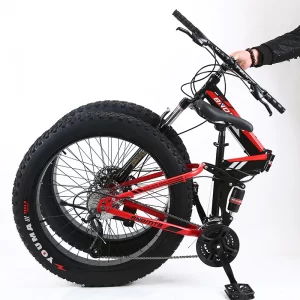
Characteristics of tires:
When it comes to the characteristics of tires, it is nothing more than talking about these aspects: rolling resistance, grip, road feel, wear resistance, explosion-proof, weight, etc. In addition, two properties that are often overlooked are power transmission and quality. The following describes these features.
Rolling resistance:
When the wheel starts to roll, you want it to go all the way down without slowing down, which of course isn’t possible because of wind and other resistance. The smaller the rolling resistance of the tire, the easier it is to maintain the speed. In other words, when you pedal with the same force, the speed will increase without the need to increase the pedaling force to accelerate. Therefore, the bigger the grip, the better.
Grip:
When cornering or braking, the grip of the tires is the key. Even when accelerating in a straight line, a grip is required when the force is strong. So, the bigger the grip, the better.
Wear resistance:
Today’s bicycle tires are generally considered expensive, and everyone does not want expensive things to break after one use. At this time, wear resistance needs to be considered. The better the wear resistance, the longer the mileage the tire can last. A flat tire is arguably the most common accident in cycling. Moreover, to be lightweight, the tire skin often has only a thin layer, which is not easy to withstand the puncture of stones, glass, and branches. Most tires for outdoor use have an explosion-proof design to prevent foreign objects from piercing the mesh cover.
Weight:
If you’re looking for light weight, then you’ll be counting the weight of any single component on the bike. The inner and outer tires are also a lightweight target, and lightweight tires can reduce the weight by as much as one or two hundred grams. Regardless of the effect of reducing the weight of the tires, just seeing the weight reduction of the whole bicycle will make people feel that the lightweight tires are worthy. Lightweight tires are incredible, the difference in weight can be as much as 50-100 grams. In fact, lighter-weight tires also bring many performance advantages, first of all, it takes some advantage when climbing, and it is easier to accelerate due to lower inertia. Much of the weight savings comes from thinner skins and mesh covers, and even the omission of explosion-proof layers. It can bring more sensitive road response, more comfortable road feeling, and lower rolling resistance.